5 Calm-Down Strategies for Autistic Children During Meltdowns
A meltdown is not a choice or a bid for attention. It is usually a sign that a child's nervous system is overwhelmed. In that moment, the goal is safety and calm, not teaching or consequences.
Calm comes before conversation
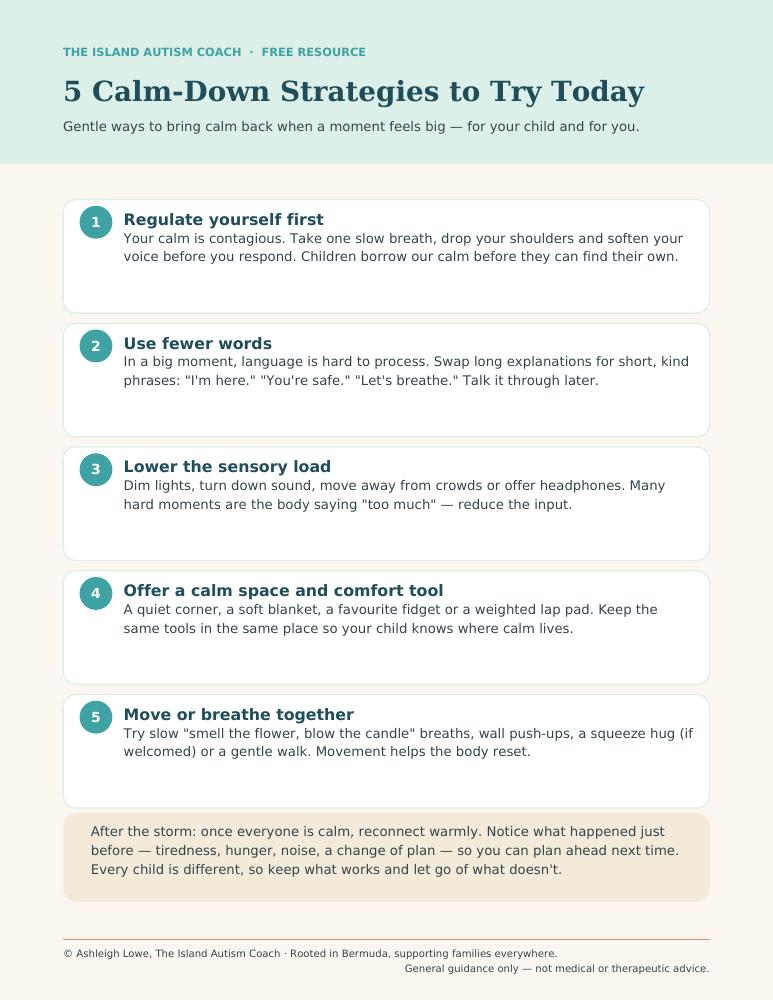
When a child is overwhelmed, the thinking part of the brain is harder to reach. Fewer words, a quiet voice and a steady presence help more than explanations. Your calm can help your child find theirs.
Strategies to try
Different children need different things, so try one at a time and notice what helps.
- Lower the input: dim lights, reduce noise, give space.
- Offer deep pressure, such as a firm hug or weighted blanket, if your child likes it.
- Breathe slowly and visibly alongside your child.
- Move to a familiar calm space.
- Offer a favourite comfort item or rhythmic movement.
Reconnect afterwards
Once your child is calm, a gentle moment together matters more than a talk about what went wrong. Later, you can quietly look at what led up to it and plan small changes.
Key takeaways
- Meltdowns signal overwhelm, not misbehaviour.
- Fewer words, less input, steady presence.
- Reconnect first, reflect later.