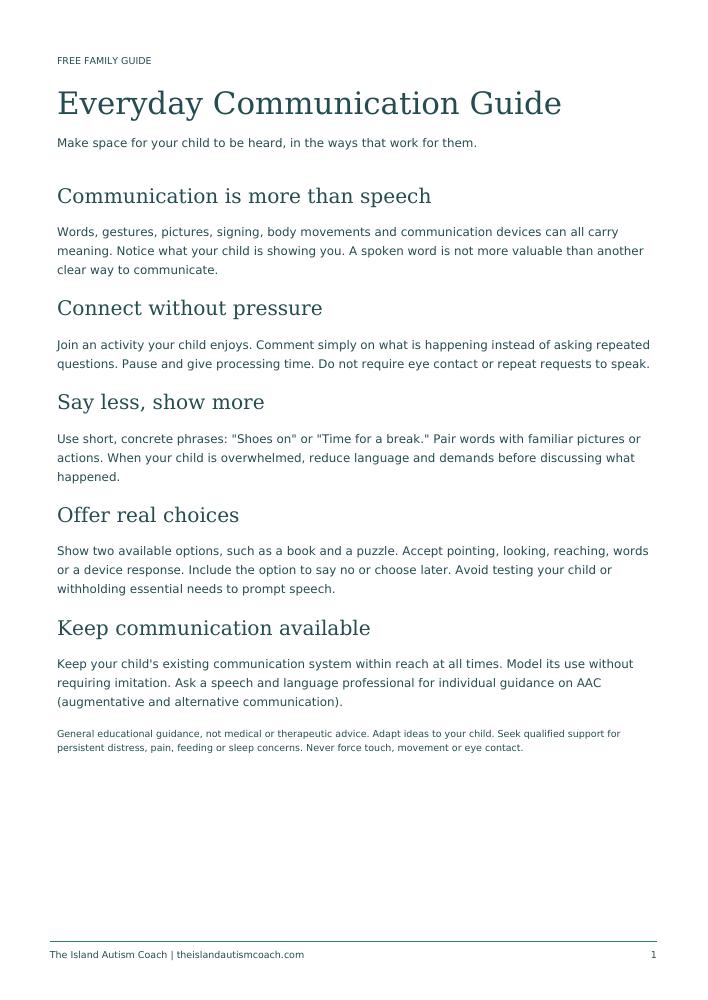
Low-Pressure Communication Strategies for Autistic Children
Communication is much more than speech. Gestures, sounds, movement, pictures and behaviour all carry meaning. When we lower the pressure to answer in a particular way, many children find it easier to connect.
Every form of communication counts
Pointing, leading you by the hand, echoing a phrase or walking away are all ways a child tells you something. Responding to these signals shows your child that their communication works.
Reduce the pressure
Fewer questions, more comments. Instead of asking "What did you do today?", try sharing what you noticed and leaving space. Give extra time before repeating yourself.
- Pause and count to ten before rephrasing.
- Use short, clear sentences.
- Join your child in their interest before asking anything of them.
Use visuals as support
First / Then cards and simple choice strips make expectations visible and give your child a way to answer without words. Offer them as a help, never as a test.
Share a communication passport
A one-page summary of how your child communicates, what they love and what helps when they are upset makes it easier for teachers, relatives and carers to understand them quickly.
Key takeaways
- Respond to all forms of communication.
- Comment more, question less, wait longer.
- Visual supports help children answer in their own way.