How to Use Visual Schedules and Routine Cards with Autistic Children
Many autistic children understand what they see more easily than what they hear. A visual routine turns the day into something your child can look at, check and predict, which can ease worry about what comes next.
Why visuals help
Spoken instructions disappear as soon as they are said. A picture stays. Your child can return to it as often as they need, without having to ask or remember.
Start small
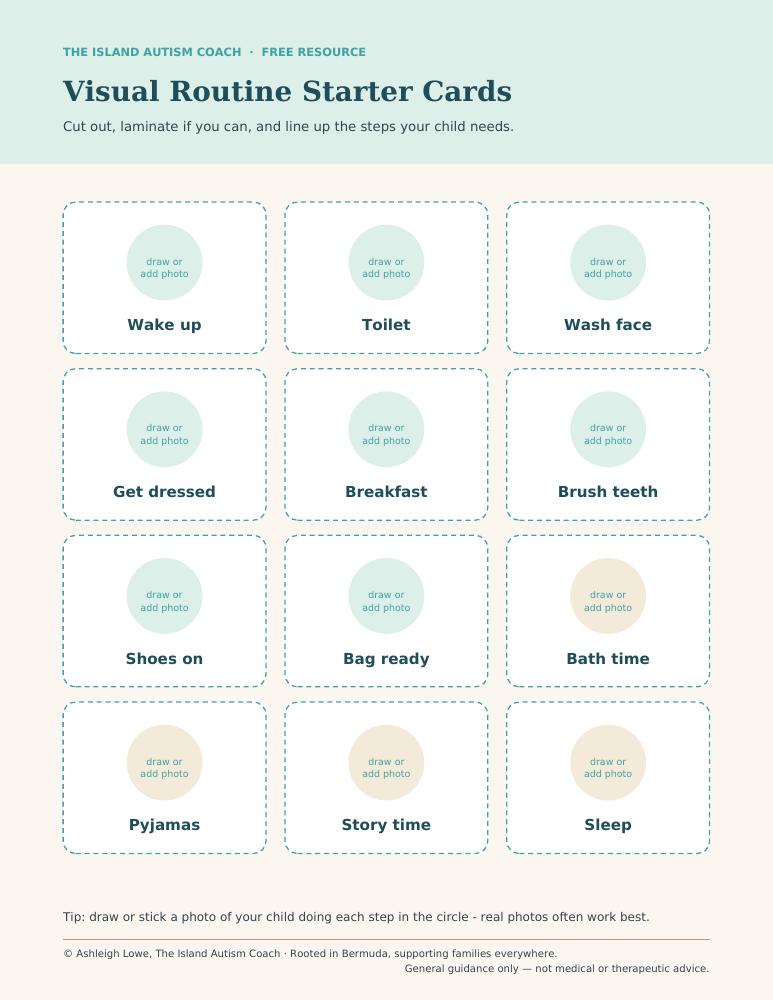
Choose one routine that is often tricky, such as getting ready for school, and use just three to five cards. Once that feels familiar, add more.
- Put cards at your child's eye level.
- Go through them together before starting.
- Let your child move or turn over each card when a step is done.
Make it personal
Photos of your own home, your child's toothbrush or their school bag are often more meaningful than generic pictures. Swap cards in as you go.
Keep it flexible
A visual routine is a guide, not a rule. If plans change, show the change on the cards so your child can see it rather than be surprised by it.
Key takeaways
- Pictures stay when words fade.
- Begin with one routine and a few cards.
- Use real photos and show changes visually.